
In this guide
This article provides general information and recommendations, not legal advice, and does not create an attorney-client relationship. Laws, deadlines, policy terms, and available options depend on the facts. Readers may wish to consult a qualified attorney about their circumstances.
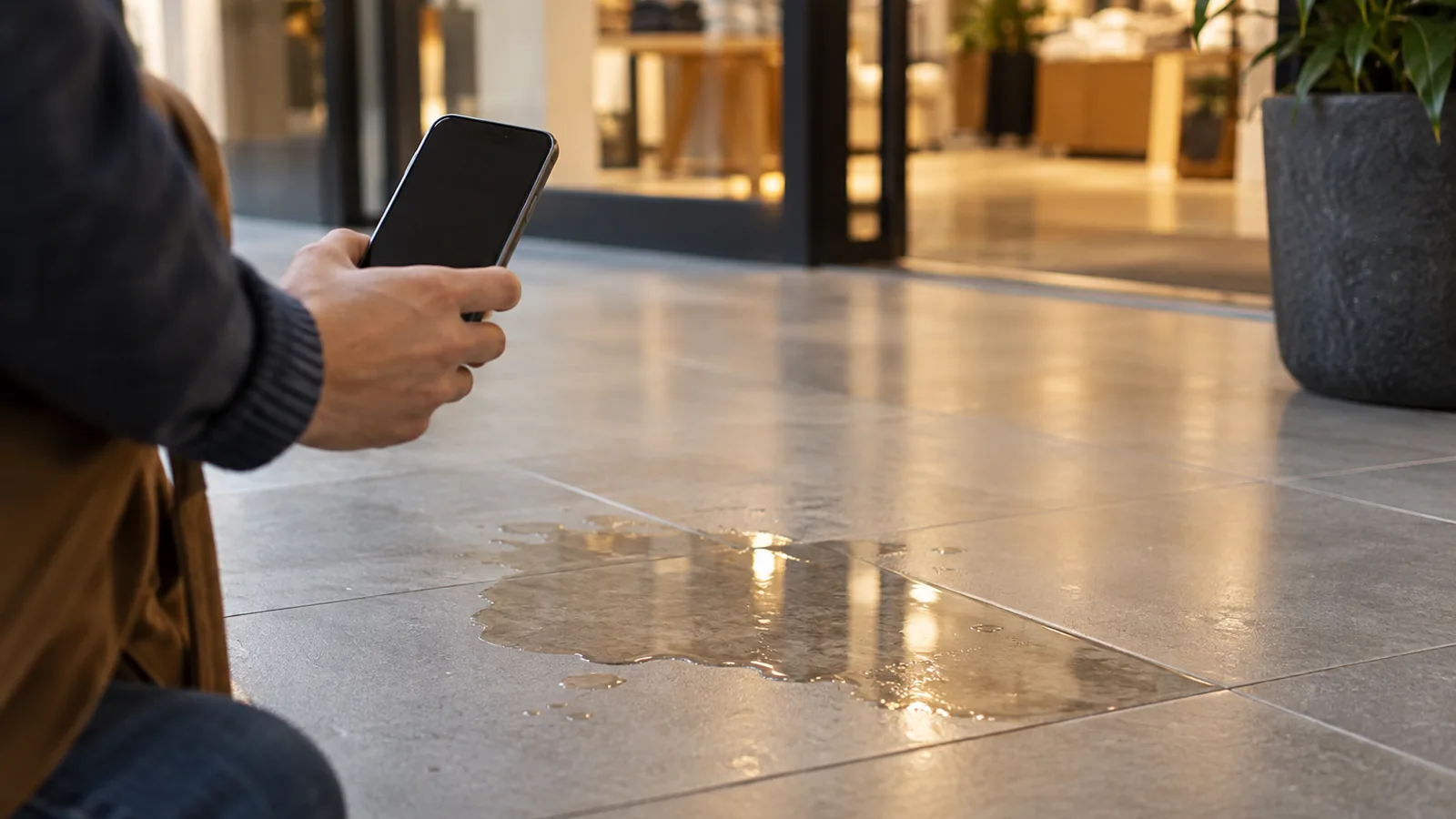
After a fall, safety and medical needs are usually the first considerations. If the area can be documented without risking another injury or delaying care, photos or video of the condition and surrounding space may be helpful. Shoes and clothing, witness information, incident details, medical and work records, and messages from the property or insurer may also be relevant.
A spill can be cleaned, a loose mat can be moved, and camera footage may not remain available. You may also be in pain, missing work, or trying to manage an adjuster who wants a statement before you know what happened. You do not have to solve the case at the scene. Preserving available information accurately may be helpful.
Slip-and-fall evidence checklist
Before putting the file aside, it may be useful to confirm whether the following available materials have been retained:
Use this checklist on screen or print it. Check the records you have and use the notes column for missing items or file locations.
| Record or question | Have it | Notes / missing items |
|---|---|---|
| Original scene photos and video. | ||
| Shoes, clothing, and damaged personal items. | ||
| The incident report or your own dated notes. | ||
| Witness names and contact information. | ||
| Camera locations and any preservation correspondence. | ||
| Medical, expense, and missed-work records. | ||
| Proof of why you were at the property. | ||
| Communications from the owner, manager, or insurer. | ||
| Every release or settlement document. |
The Los Angeles slip-and-fall page explains the broader claim process. This article gives general California information, not legal advice about a particular fall. No one can promise that evidence exists, that a preservation request will succeed, or that a claim will have a particular result.
What should you photograph after a slip and fall?
When it can be done safely, close photographs of the condition and wider views of the location may be useful. If it is relevant and safe, photograph:
- Liquid, debris, flooring, a height difference, or another visible condition.
- The route you took and the place where you landed.
- Entrances, mats, stairs, handrails, displays, carts, or equipment nearby.
- Lighting and sight lines from the direction you approached.
- Warning cones or signs and their location.
- Footprints, wheel tracks, cleaning marks, or debris.
- Outdoor weather and surface conditions.
The scene should not be altered or recreated for documentation. Original photo and video files may be more useful than compressed copies from a message or social-media post.
If you cannot take pictures, a companion or witness may be able to do it. Your health comes first.
Accurately reporting the fall
It may be appropriate to notify the store, restaurant, hotel, apartment manager, parking operator, or other responsible contact about what happened. Consider asking whether an incident report will be prepared and whether a copy is available. If no copy is provided, a dated personal note may include:
- The date, time, and exact location.
- What you saw before and after the fall.
- The names and job titles of the people who responded.
- Any report or reference number.
- Statements you heard, using the speaker’s words as closely as you can remember them.
A factual description may be more reliable than speculation. You may not know how long a condition existed, who created it, or who was responsible for the area. It is better to say that you do not know than to fill in a gap because someone is pressing for an immediate answer.
Who may have witnessed or recorded the fall?
Contact information from anyone who saw the fall or the condition may be useful. Customers, tenants, employees, security staff, maintenance workers, or delivery drivers may know something useful.
It may be helpful to note where cameras are located and which direction they appear to face, including systems at the property, nearby businesses, common areas, elevators, parking facilities, and street-facing locations. The presence of a camera does not establish that it was operating or captured the incident.
A targeted preservation request can ask the person or business controlling a system to retain identified footage or records. It cannot guarantee that the material exists, covers the right area, was kept, or will be produced. Retention practices differ, so prompt follow-up can matter.
Shoes, clothing and damaged items
The shoes and clothing worn during the incident may be relevant evidence. Pending case-specific preservation advice, maintaining them in their existing condition and photographing the soles and any wet, torn, or marked areas may be useful.
Damaged glasses, a phone, a bag, or another relevant item may be kept in a dry, secure place and left unchanged pending case-specific advice.
Records of medical care and missed work
Call 911 for a medical emergency. Otherwise, medical care may be guided by the person’s condition and qualified providers. Accurate information about when and how the fall occurred, along with available medical records, bills, and insurance explanations, may assist later review.
If the injury affects employment, work restrictions, missed-shift records, pay information, and employer messages may be relevant. Transportation receipts and other incident-related expenses may also assist a review. This can feel like one more burden when you are already hurting, so a simple envelope or digital folder is enough to start.
Medical records document the history and care reported to the provider. They do not, by themselves, decide legal causation, fault, or the value of a claim.
Which records help identify who controlled the property?
The name on the storefront may not identify everyone responsible for the area. An owner, tenant, operator, manager, contractor, or someone else may have had control.
Receipts, reservations, available lease or management information, incident paperwork, and messages from the property or insurer may help identify who controlled the area. Inspection logs, cleaning records, work orders, and prior complaints may also be relevant if they are later provided, although a request does not establish that those records exist or will be produced.
If your fall involved LA Metro
For a fall involving a Metro station, vehicle or facility, record the station or stop, the exact area and the time. Keep any incident number and the name or role of the person you notified.
If you are making a claim against LA Metro, check its official Legal Services instructions and Claims for Damages form. Metro currently accepts completed claim forms only in person or by mail and says claims sent by email will be rejected. Do not treat the email address on that page as a claim-filing option.
Keep evidence requests and claim paperwork in separate parts of your file. Reporting an incident or asking for video is not the same task as submitting a claim. The correct entity and any applicable deadlines still need prompt, case-specific review.
Why notice and timing matter in California
California Civil Code section 1714 provides a general ordinary-care rule. For private-property claims, CACI 1000, 1001, and 1011 give a more specific framework.
CACI 1000 addresses whether the defendant owned, leased, occupied, or controlled the property; was negligent in the property’s use or maintenance; caused harm; and was a substantial factor in causing that harm. CACI 1001 explains that reasonable care may include discovering an unsafe condition and repairing, replacing, or adequately warning about it. Under CACI 1011, constructive notice depends on whether the condition existed long enough that a person using reasonable care would have discovered it, considering all the circumstances.
A fall alone does not make a property owner automatically liable. Control, notice, reasonable care, causation, comparative fault, and damages all depend on the facts. A photo may show what a condition looked like, but it may not show how long the condition was present. Video, witness accounts, inspection practices, or maintenance records may help with that question if they exist.
Claims involving public property follow a different statutory framework and may have different claim-presentation and filing rules. Evidence retention and legal deadlines are also separate concerns. See California personal injury filing deadlines if the fall involved a sidewalk, government building, transit property, or another potentially public location.
What Providence tries to preserve before it changes
The condition itself is only one part of the evidence. Providence looks for the incident report, camera locations, inspection and maintenance records, prior complaints, witness information, and control of the property. In Los Angeles, a Metro facility, City sidewalk, County building, state property, and private business can involve different evidence custodians and claim procedures. See the firm’s slip-and-fall page, personal injury guide, and brain injury page when those issues apply.
Sources and references
You can ask for help before evidence disappears
Providence Trial Lawyers can help you identify what may still be available and explain the next steps without pressuring you to make a decision. Call 213-380-5858 for a free consultation, 24/7. No fee unless we win.